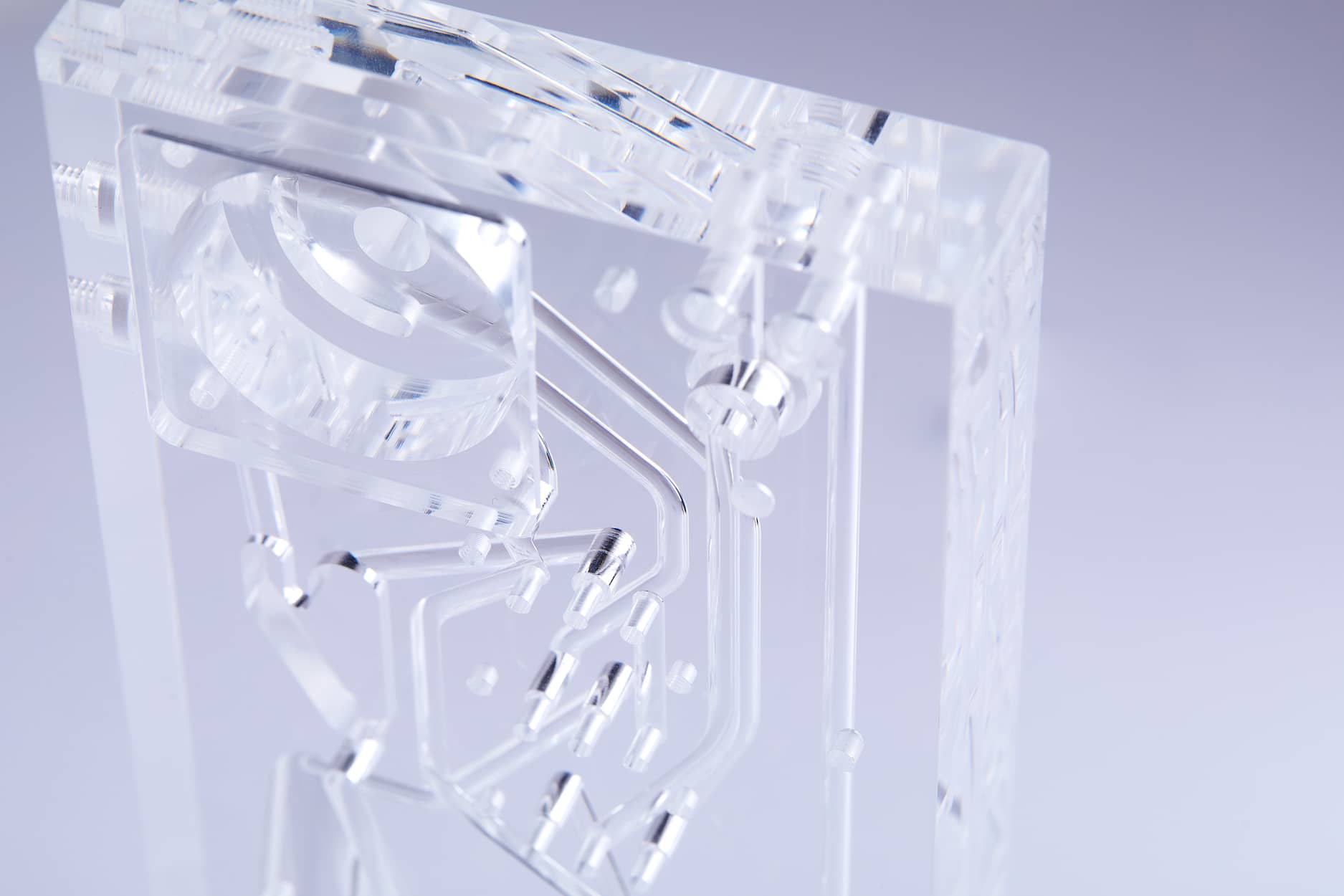
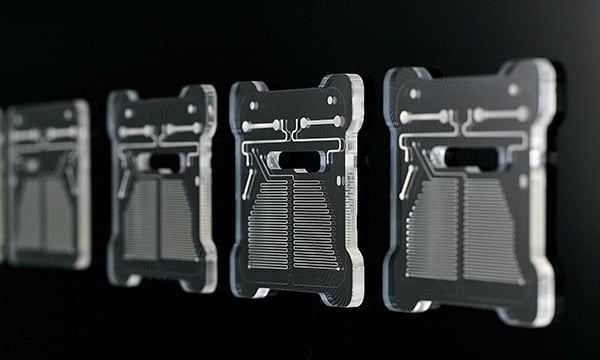
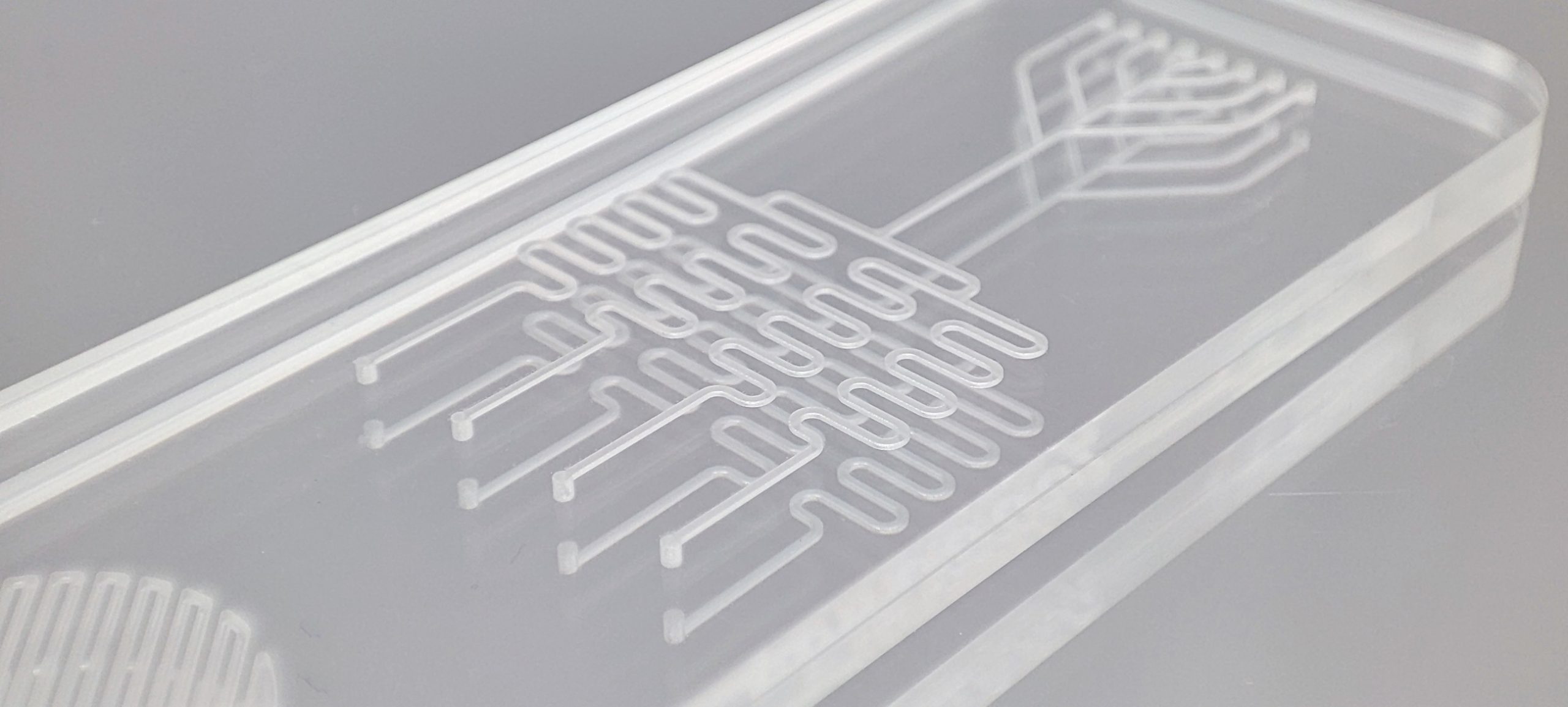
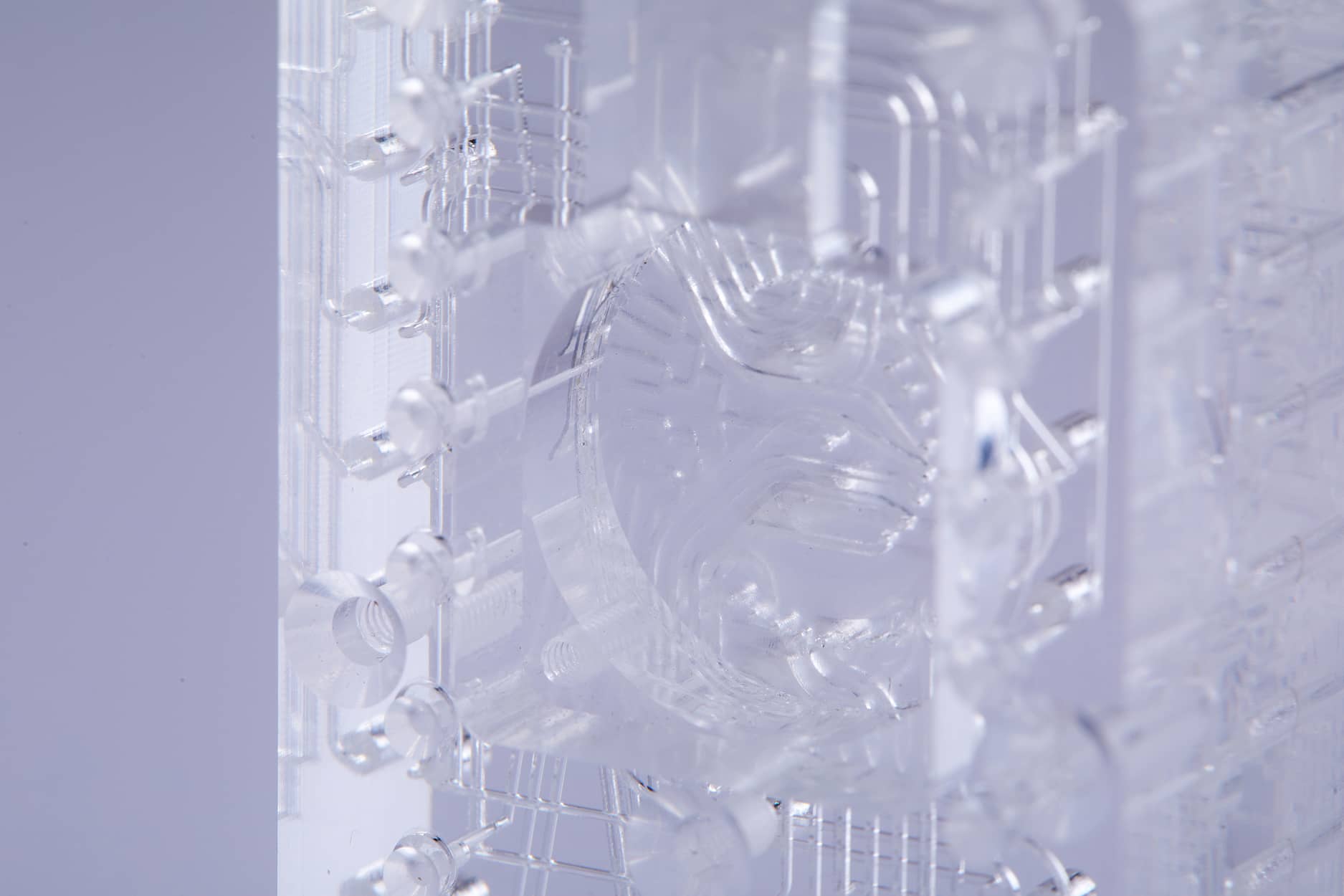
IPFL manufactures high-performance Cyclic Olefin Copolymer (COC) microfluidic devices with exceptional optical clarity, chemical resistance, and biocompatibility.
COC (Cyclic Olefin Copolymer) is a high-performance amorphous thermoplastic engineered for demanding optical and analytical applications. Its unique polymer structure delivers near-zero birefringence, exceptional UV-to-visible light transparency, and a moisture absorption rate close to zero — making it the material of choice for precision microfluidics.
Unlike PDMS or glass, COC can be CNC milled, diamond-turned, and thermally bonded to sub-micron tolerances, enabling the fabrication of complex channel networks at production scale. It is inherently biocompatible, chemically inert to a wide range of solvents, and available in multiple grades tuned for specific flow and detection requirements.








IPFL combines CNC micromilling, diamond-tool cutting, laser machining, and thermal bonding to manufacture COC microfluidic devices to tolerances that match your assay requirements. Whether you need a 10-device prototype run or a production batch of thousands, our process is designed for consistency and repeatability.
Our in-house diffusion bonding and laser welding capabilities allow sealed COC devices to be produced without adhesives, eliminating channel contamination and ensuring compatibility with sensitive biological and chemical assays.
Every COC device we manufacture benefits from our ISO 9001-certified quality management system, full dimensional inspection, and a documented manufacturing record.

Where COC Microfluidics is Transforming Industries
COC microfluidic devices are at the heart of a wide range of high-growth application areas — from point-of-care diagnostics to pharmaceutical drug discovery. The sectors below represent IPFL’s core customer base for COC components.
In Vitro Diagnostics (IVD) & Point-of-Care
COC’s optical transparency, biocompatibility, and dimensional stability make it the preferred substrate for lateral flow assay cartridges, PCR chips, and microfluidic ELISA devices.
Genomics & DNA/RNA Analysis
Capillary electrophoresis chips, qPCR reaction chambers, and droplet digital PCR (ddPCR) devices rely on COC’s UV transparency and low auto-fluorescence to detect nanogram-scale nucleic acid concentrations.
Drug Discovery & Pharmaceutical
High-throughput screening platforms, organ-on-chip models, and compound dilution chips are manufactured in COC to enable parallel assay workflows with minimal reagent volumes.
Cell Biology & Organ-on-Chip
COC’s biocompatibility and gas impermeability (unlike PDMS) prevent unintended drug absorption into the chip substrate — a key advantage for cell viability studies and pharmacokinetic modelling.
Environmental & Water Quality Monitoring
Portable, field-deployable microfluidic devices for heavy metal detection, pathogen screening, and water quality monitoring require materials that perform reliably in harsh outdoor environments.
Food Safety & Agricultural Testing
Rapid fluidics tests for pesticide residues, allergens, mycotoxins, and bacterial contamination in food products are an emerging growth area for COC chips.