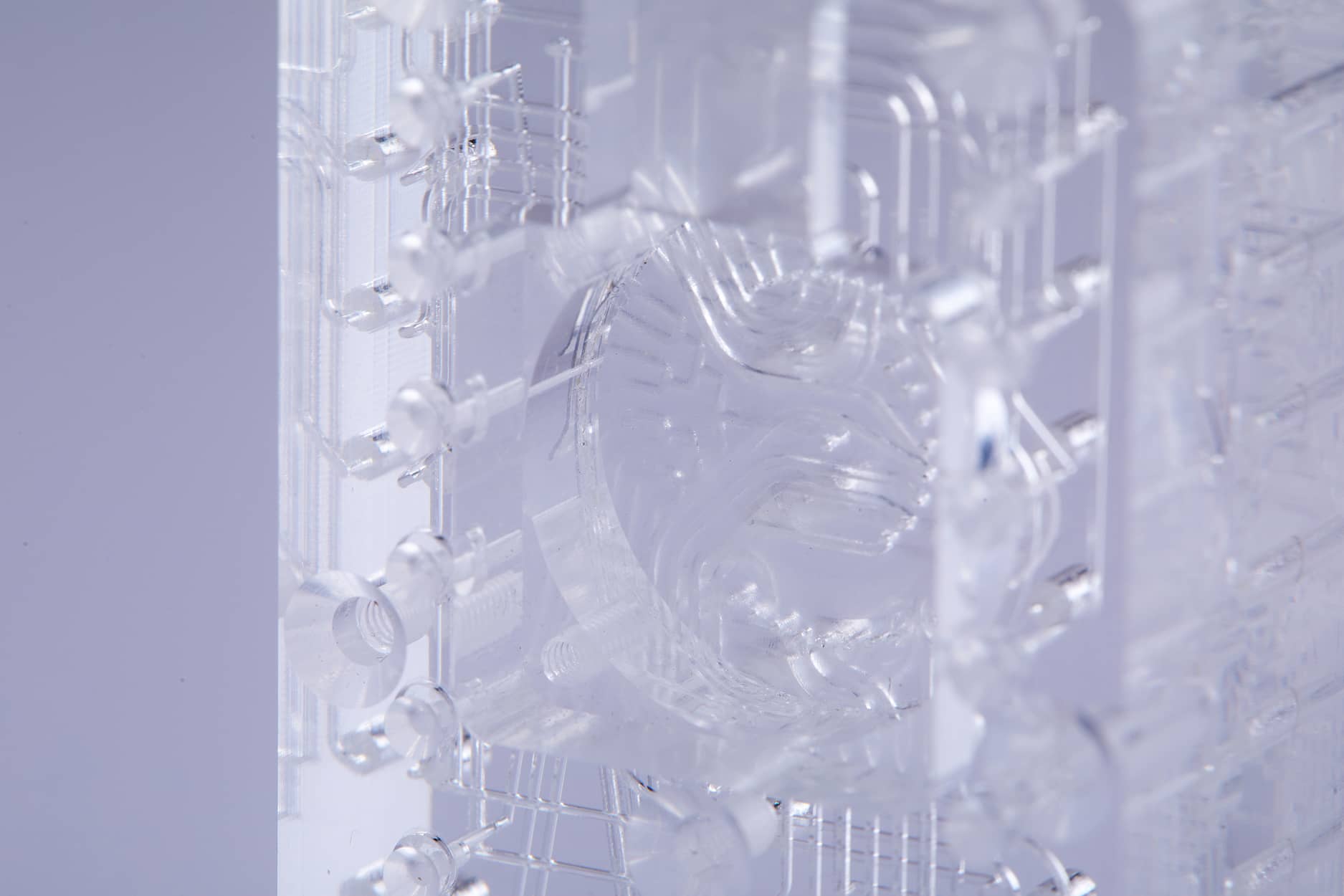
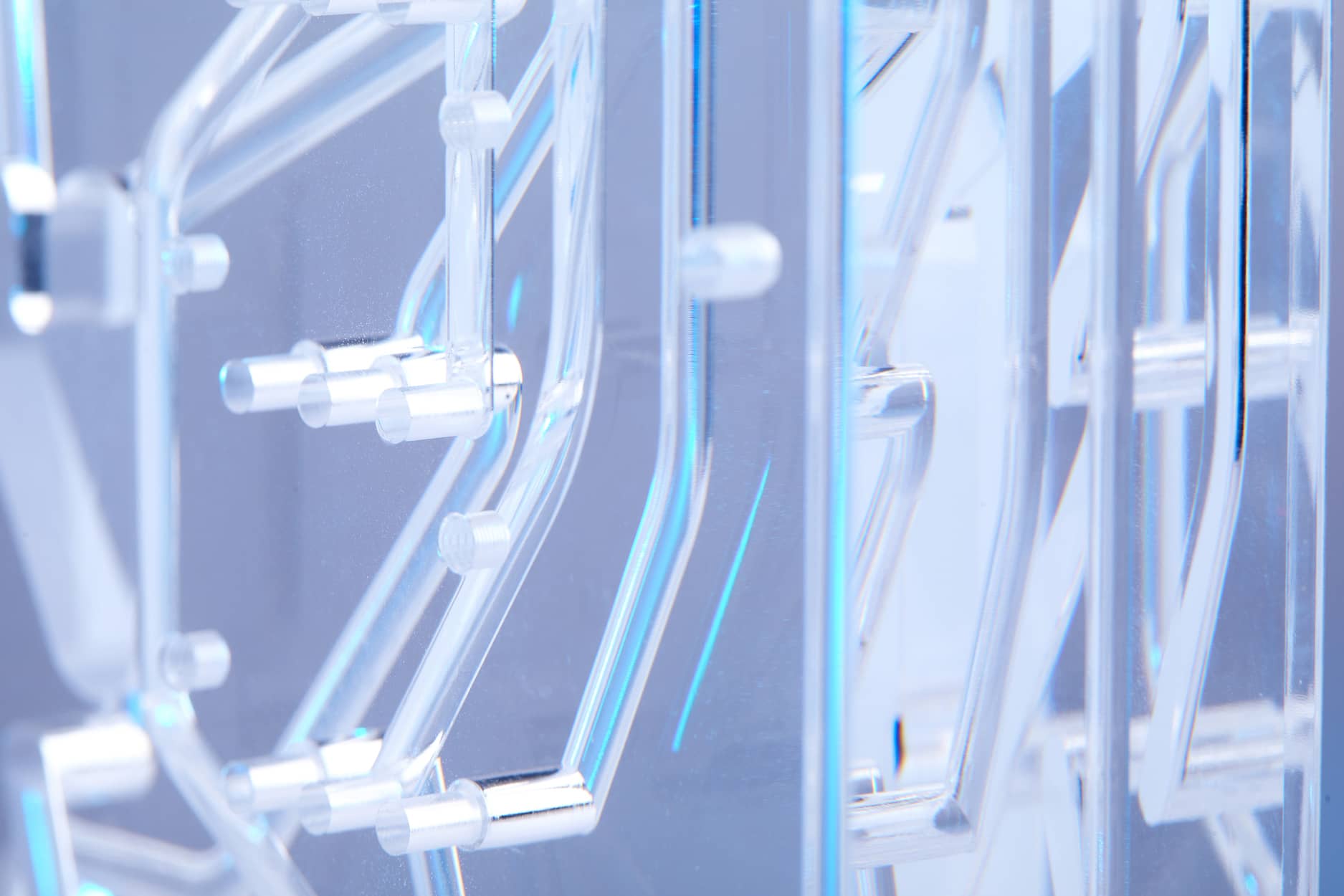
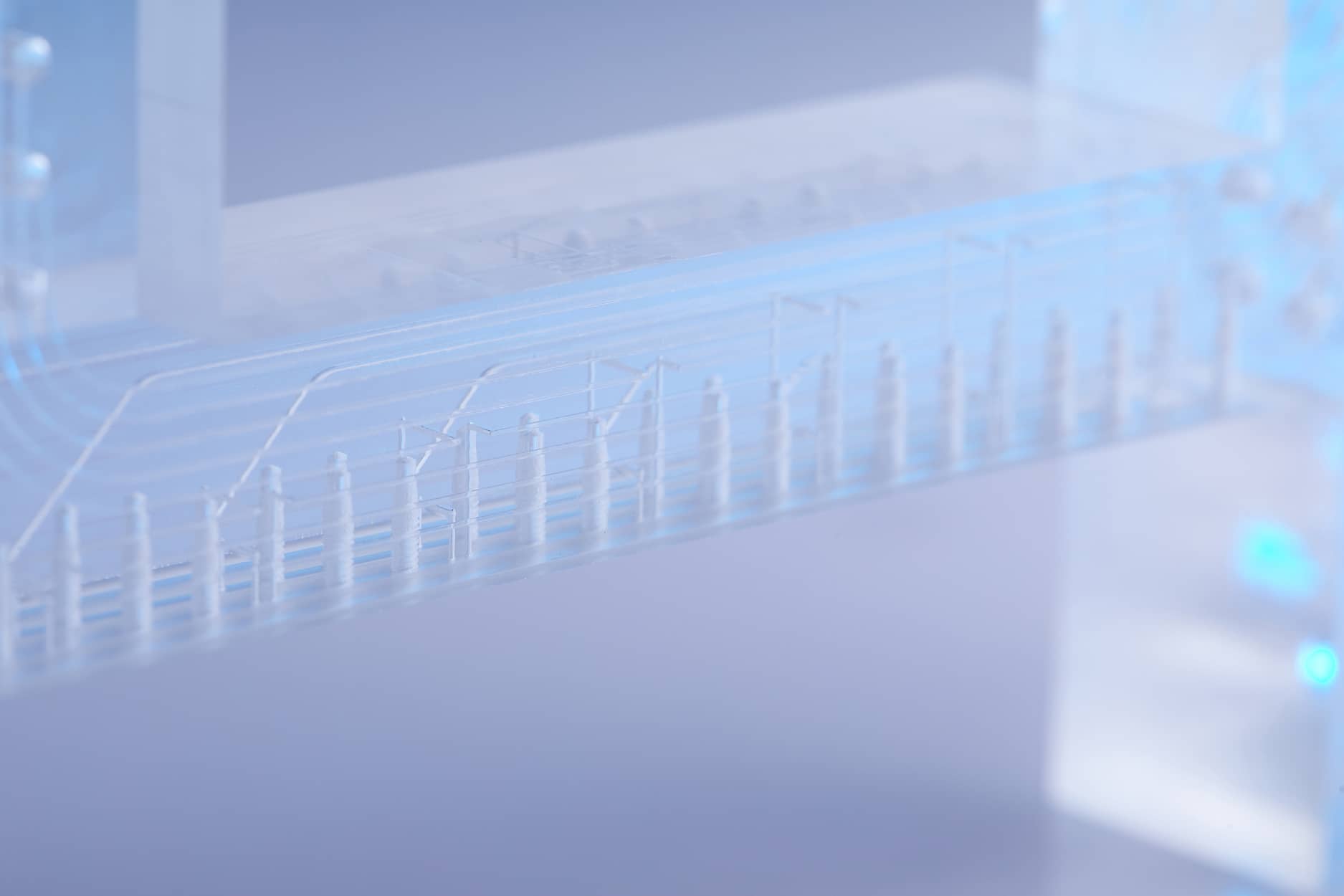
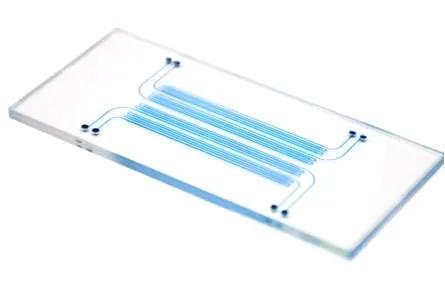
Tough, optically transparent polycarbonate microfluidic chips for PCR, thermal cycling, and high-impact biomedical applications.
Polycarbonate (PC) is a tough, amorphous thermoplastic produced from bisphenol A. It is transparent through the visible spectrum, biocompatible, and offers a notably higher glass transition temperature than acrylic, making it one of the most widely used materials for microfluidic applications that involve thermal cycling, elevated operating temperatures, or demanding mechanical environments.
PC sits in the middle of the microfluidic material range. It outperforms acrylic on temperature resistance and impact strength, and it is significantly more cost-effective than COC, Ultem, or PEEK. For applications where acrylic’s 96°C heat distortion temperature is the limiting factor but the budget or application doesn’t justify premium materials, polycarbonate is usually the right answer.
Its most well-established microfluidic application is PCR (polymerase chain reaction) chip fabrication, where the material’s ability to withstand repeated thermal cycling between temperatures up to 95°C without deforming or degrading is a critical requirement. More broadly, PC is used across biomedical diagnostics, cell biology, and analytical chemistry wherever a transparent, durable, and machinable thermoplastic is needed.
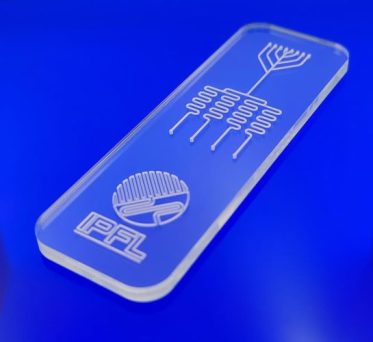







IPFL manufactures polycarbonate microfluidic chips and manifolds using CNC micromilling and laser machining, producing channel networks with clean walls, tight dimensional tolerances, and consistent surface quality. Channel widths of 150µm are achievable with controlled aspect ratios, making PC suitable for a wide range of analytical and diagnostic device geometries.
For sealed devices, we use thermal bonding with precisely controlled temperature profiles to avoid channel distortion, or solvent-assisted and chemical bonding methods where higher bond strength or tighter process tolerances are required. The bonding method is selected based on your channel geometry, operating pressure, and chemistry requirements.
Post-machining surface polishing is available for applications where channel wall roughness needs to be minimised for optical quality or droplet flow control. Every polycarbonate device we produce is manufactured under our ISO 9001-certified quality system with full dimensional inspection and a documented manufacturing record.

Polycarbonate is the material of choice where thermal cycling, impact resistance, and biocompatibility are all needed in a cost-effective substrate. The sectors below represent the core application areas for PC microfluidic components.
PCR and DNA Thermal Cycling Chips
Polycarbonate is the established substrate for PCR microfluidic devices. Its glass transition temperature of 145°C allows chips to withstand the thermal cycling between denaturation (~95°C), annealing (~55°C), and extension (~72°C) without channel deformation or substrate degradation. Acrylic cannot reliably handle repeated cycling to 95°C; PC can. For qPCR, digital PCR, and loop-mediated isothermal amplification (LAMP) devices, PC is the standard thermoplastic choice.
In Vitro Diagnostics (IVD) and Point-of-Care
Diagnostic cartridges and point-of-care test devices that need to withstand rough handling, shipping, and use outside a laboratory. PC’s combination of toughness, optical transparency for readout, and biocompatibility makes it well suited to disposable diagnostic formats where device robustness is as important as assay performance.
Cell Biology and Organ-on-Chip
Microfluidic devices for cell culture, perfusion studies, and organ-on-chip platforms where biocompatibility, transparency for microscopy, and dimensional stability are required. PC’s low small-molecule absorption compared with PDMS makes it a better substrate for pharmacokinetic studies and drug testing applications where unintended absorption into the chip would compromise assay results.
Biomedical Research and Analytical Chemistry
Flow cytometry chips, electrophoresis devices, immunoassay platforms, and sample preparation manifolds for biomedical and analytical chemistry research. PC’s combination of transparency, biocompatibility, and durability covers a broad range of laboratory applications where glass would be fragile and acrylic would lack sufficient thermal or mechanical headroom.
Droplet Generation and Emulsification
Droplet generators and flow-focusing devices, particularly for applications involving polymerisation reactions or thermally triggered processes where the device needs to survive elevated temperatures. PC’s surface can be polished or chemically treated to control wettability for droplet applications where the aqueous-oil interface behaviour needs to be optimised.
Industrial and Process Monitoring
Durable fluidic manifolds, flow cells, and monitoring devices for industrial environments where acrylic’s fragility would be a problem. PC’s toughness and resistance to impact and vibration make it a more reliable choice for devices that will be mounted in machinery or exposed to physical stress in service.
IPFL has been precision machining polycarbonate components for diagnostic, biomedical, and industrial applications for over 56 years. We understand the material’s behaviour during machining and bonding, including the narrow process windows that make PC bonding challenging, and we have the in-house capability to consistently produce sealed devices that hold pressure and maintain channel integrity.
We work across the full microfluidic material range, including acrylic, COC, Ultem, PEEK, and PTFE, so if your application is better served by a different substrate, we can advise and transition your design without you changing supplier. Our ISO 9001-certified quality system and documented manufacturing records support regulated development programmes in medical devices and diagnostics.
Get a quote for your parts or contact the team to discuss your project.