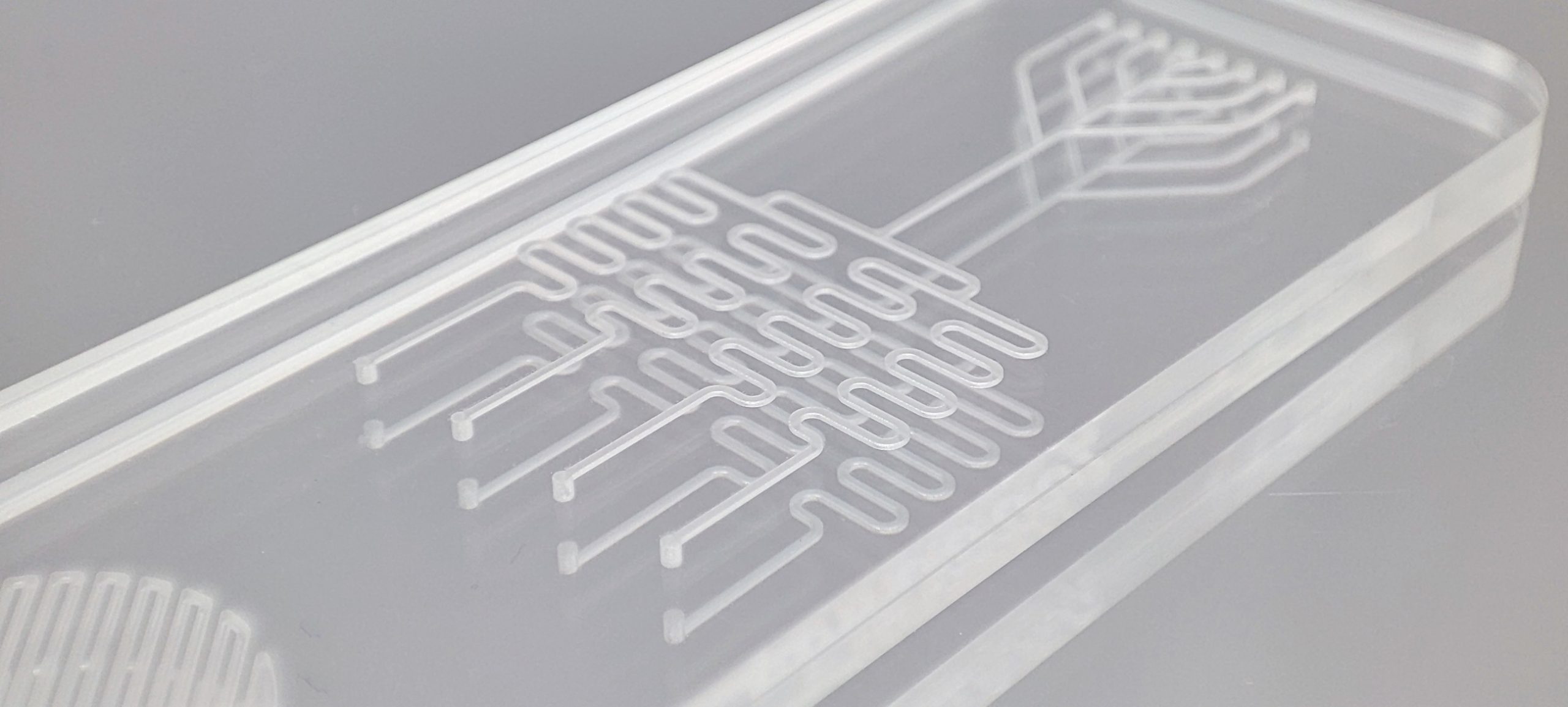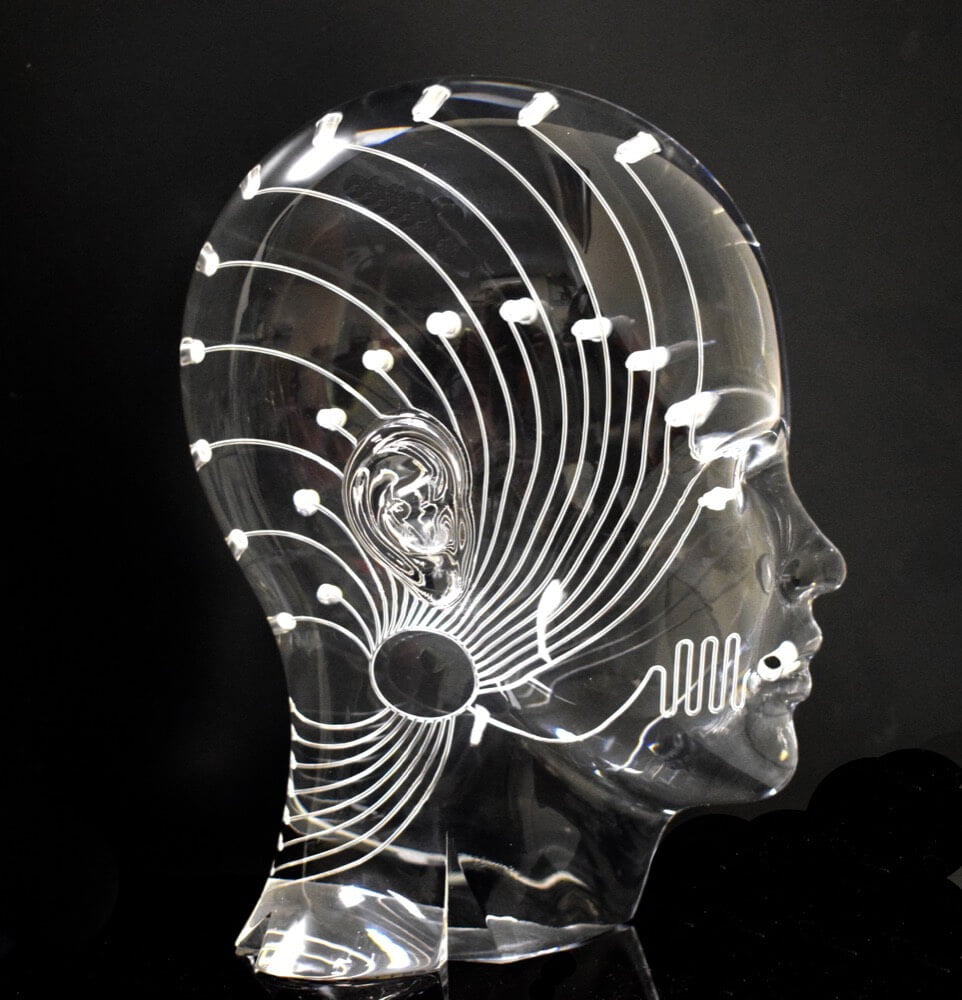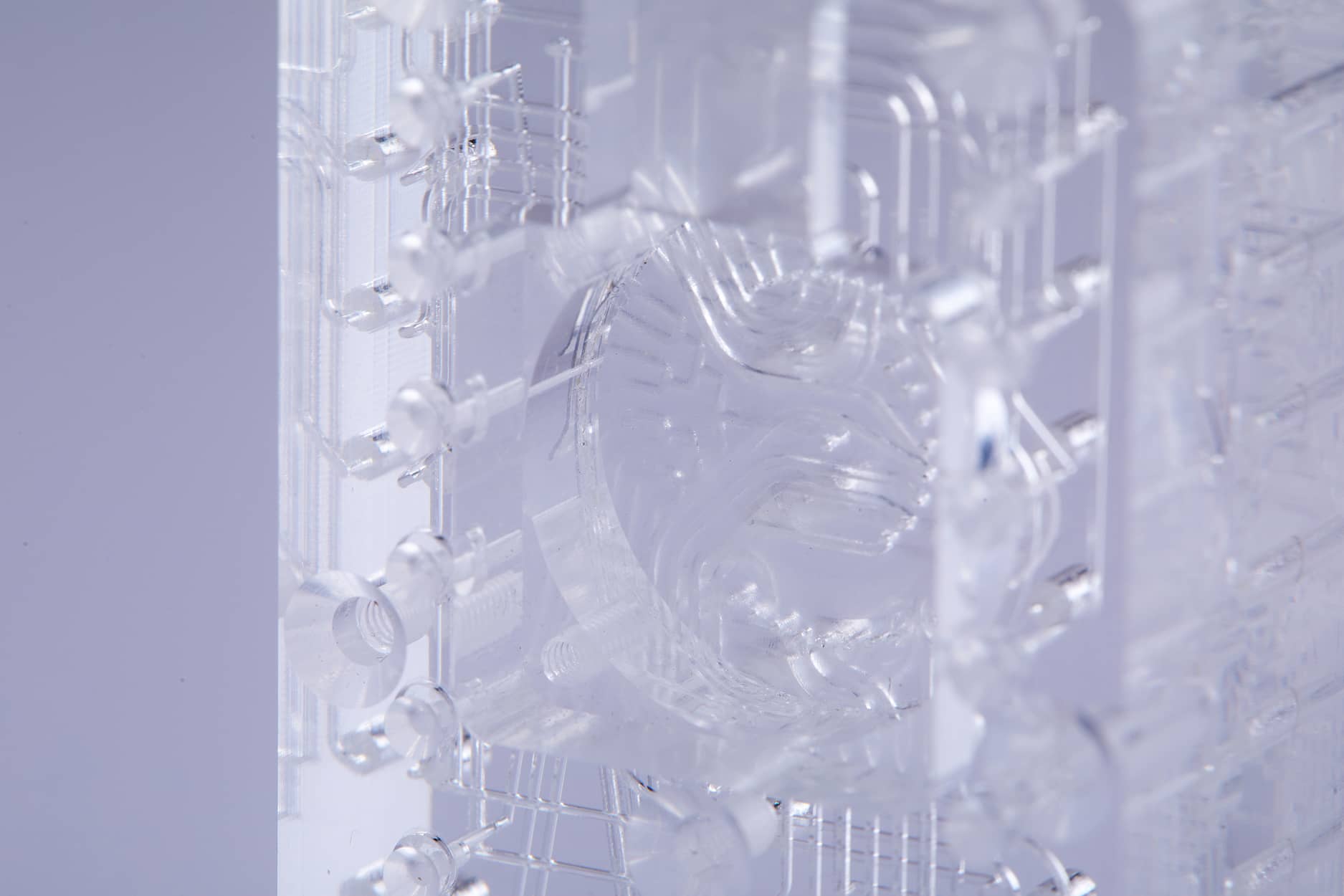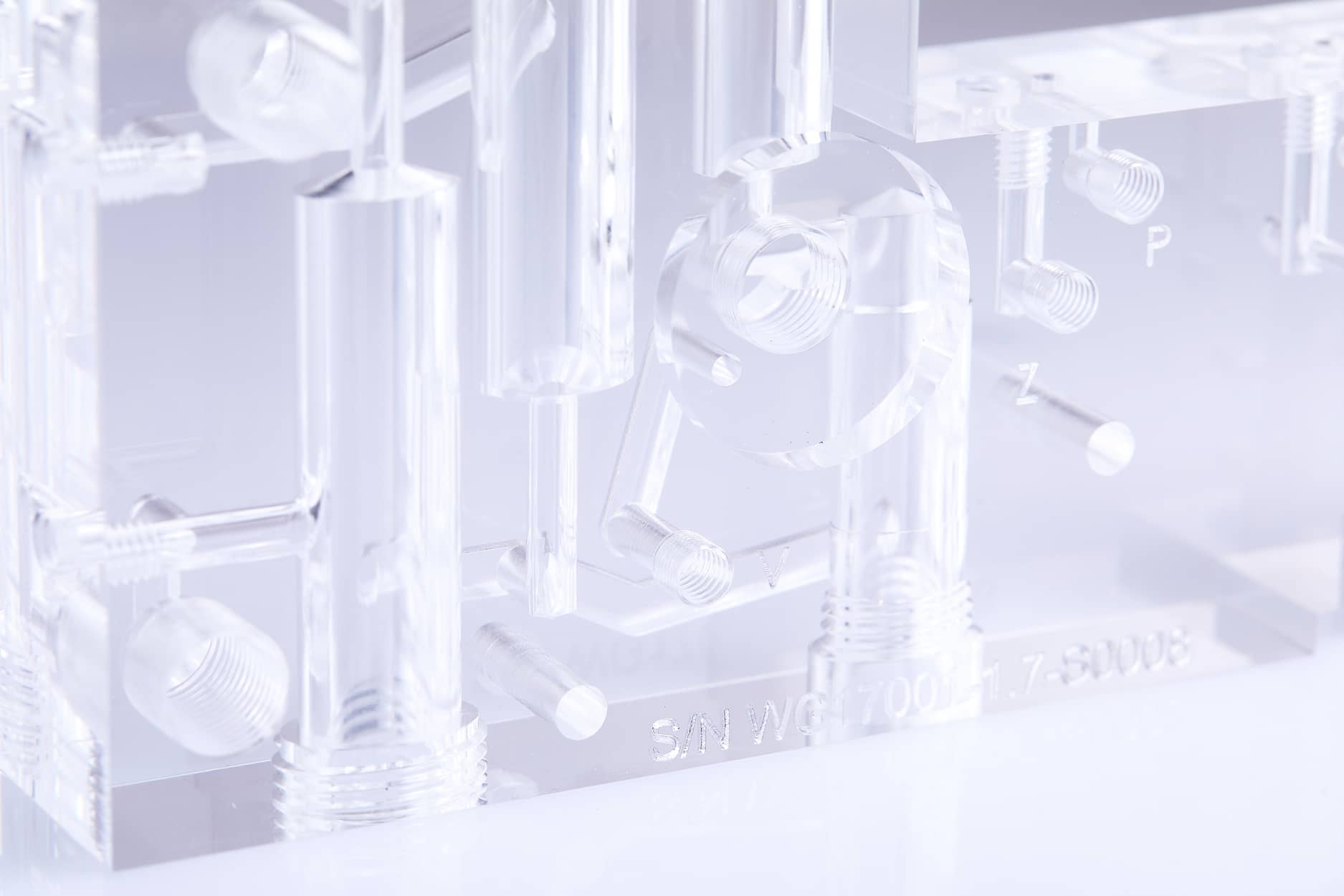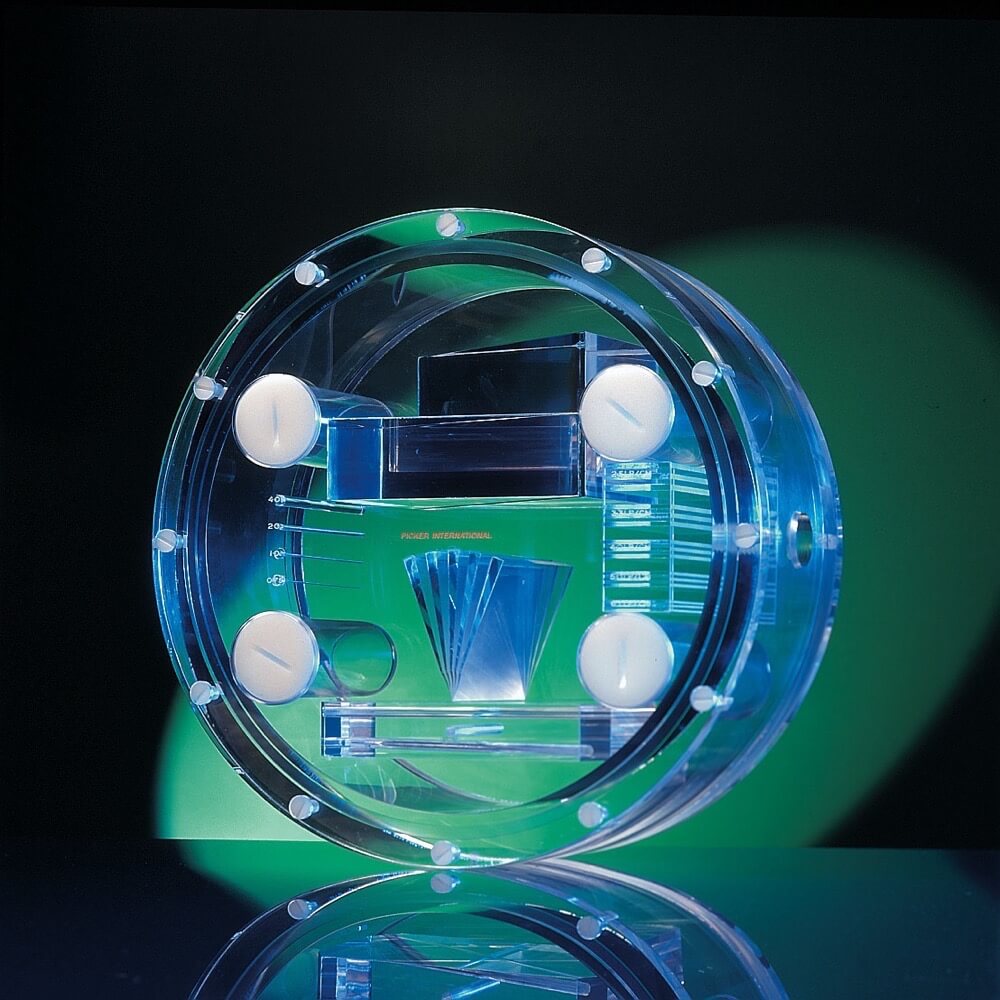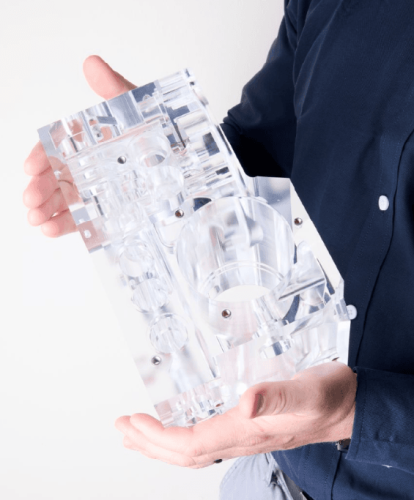
Cost-effective, optically clear acrylic microfluidic chips with precise, leak-free channels for prototyping and fluid flow visualisation.
Acrylic, or Polymethyl Methacrylate (PMMA), is a transparent, rigid thermoplastic that has become one of the most widely used materials for microfluidic chip fabrication. It offers exceptional optical clarity across the visible spectrum, good chemical resistance to aqueous solutions and many laboratory reagents, and outstanding machinability that translates directly into shorter lead times and lower production costs compared with higher-performance alternatives.
For teams building microfluidic prototypes, testing device designs, or producing chips where optical inspection of fluid flow is part of the function, acrylic is often the most practical and cost-efficient starting point. It machines cleanly, bonds well by thermal and solvent methods, and produces channels with good surface finish and dimensional accuracy. It is up to 17 times stronger than glass, lightweight, and far easier to work with than silicon or glass alternatives.
Where COC or Ultem are chosen for their extreme chemical resistance or elevated temperature performance, acrylic is the material of choice when clarity, cost, and fast turnaround are the priorities.








IPFL manufactures acrylic microfluidic chips and manifolds using CNC micromilling, laser machining, and CNC routing, producing internal channel networks with tight dimensional tolerances and clean surface finish. Our in-house diffusion bonding capability allows acrylic devices to be thermally sealed without adhesives, eliminating the risk of channel contamination and ensuring compatibility with biological and chemical assays.
Acrylic’s machinability is one of its most practical advantages in a production environment. It machines quickly and cleanly at high spindle speeds with good chip evacuation, which reduces cycle times and tool wear compared with harder materials. For prototype runs where multiple design iterations are needed fast, this translates directly into shorter turnaround and lower cost per design cycle.
We can also polish acrylic channel covers to optical quality where imaging performance is critical, and produce devices with integrated Luer lock and standard microfluidic connector ports for plug-and-play operation. Every acrylic device we produce is manufactured under our ISO 9001-certified quality system with full dimensional inspection and a documented manufacturing record.
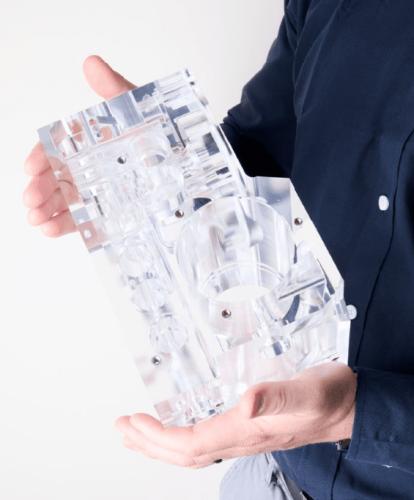
Acrylic is the most widely used substrate for microfluidic prototyping and a strong production choice wherever optical clarity, cost efficiency, and aqueous chemistry are the dominant requirements.
Microfluidic Prototyping and Design Validation
Acrylic is the default material for early-stage microfluidic device development. Its low material cost, fast machining cycle times, and good dimensional accuracy allow teams to iterate on channel geometry, junction design, and port placement quickly and affordably. Devices that will eventually move to COC or PEEK for production can be validated in acrylic first, de-risking the design before committing to more expensive substrates.
Fluid Flow Visualisation and Research
Academic and industrial research applications where direct optical observation of fluid behaviour inside channels is required. Acrylic’s high transmission across the visible spectrum makes it the best-performing standard thermoplastic for brightfield and fluorescence imaging of channel flow, droplet formation, mixing behaviour, and particle trajectories.
Droplet Generation and Emulsification
Droplet generators and flow-focusing devices for emulsification research and production, where the slightly hydrophilic surface of acrylic aids wetting of aqueous phases and the optical clarity allows direct monitoring of droplet formation at junctions. Acrylic is particularly well suited to aqueous-continuous phase droplet applications.
In Vitro Diagnostics (IVD) and Point-of-Care
Lateral flow assay cartridges, rapid test devices, and point-of-care diagnostic chips for aqueous-based assays where optical readout is required. Acrylic’s transparency, biocompatibility, and low cost per chip make it suitable for disposable diagnostic formats where production volume and cost per unit are key commercial drivers.
Lab-on-a-Chip and Electrophoresis
Acrylic is well established for capillary electrophoresis chips and lab-on-a-chip devices for nucleic acid separation and analysis. Its compatibility with electrophoretic applications and good UV transmission down to 300 nm support detection of nucleic acids and other analytes without the background interference that affects some alternative substrates.
Cell Biology and Organ-on-Chip
Acrylic devices for cell culture, perfusion studies, and early-stage organ-on-chip development where biocompatibility, optical inspection of cell growth and behaviour, and affordability are the primary criteria. For applications where drug absorption into the chip substrate is not a concern, acrylic offers a practical and cost-efficient alternative to PDMS.
Industrial and Process Monitoring
Fluidic manifolds, flow cells, and inspection windows for industrial process monitoring applications where visual access to fluid flow is needed alongside reliable channel integrity. Acrylic’s combination of strength, clarity, and low cost makes it well suited to non-aggressive industrial fluid applications

IPFL has been manufacturing precision acrylic components for microfluidic, biotech, and scientific applications for over 56 years. We have the machining capability, the bonding expertise, and the quality infrastructure to produce acrylic microfluidic chips that perform reliably in the lab and at production scale.
We also work across the full range of microfluidic materials, including COC, Ultem, and Polycarbonate so if your application outgrows acrylic, we can transition your design to a higher-specification substrate without you having to find a new supplier. That continuity of manufacturing knowledge matters when channel geometry and tolerance requirements are tight.
Every device is manufactured under our ISO 9001-certified quality system with full dimensional inspection and a documented manufacturing record.
Get a quote for your parts or contact the team to discuss your project.