Get an instant quote
HP Multi Jet Fusion (MJF)

BMF Formula1µ 3D Printing Material

Formula1µ is a rigid, static-dissipative photopolymer resin, engineered for applications where dimensional accuracy, surface consistency, and electrostatic control all need to work together.

What is BMF Formula1µ 3D Printing Material?

BMF Formula1µ is a urethane methacrylate-based photopolymer resin that incorporates a stable dispersion of discrete functionalized carbon nanotubes, known as D’Func technology. This formulation gives the material two defining characteristics: reliable static-dissipative surface resistance, and enhanced mechanical performance across tensile strength, flexural strength, and impact resistance. 

Unlike standard photopolymer resins that rely on conductive coatings or additives that can create inconsistencies across a part, the D’Func carbon nanotubes are distributed uniformly throughout the material matrix. This means the static-dissipative properties are stable and repeatable, not dependent on surface treatments that can wear or vary between prints. 

The result is a material that behaves predictably under load, resists electrostatic build-up, and holds tight tolerances when printed on BMF’s micro-precision PµSL (Projection Micro Stereolithography) systems. 

The combination of micro-precision printing and a mechanically robust, static-dissipative material means that teams working on complex medtech programmes can prototype and validate intricate geometries without compromising on material performance. This shortens development cycles and reduces the number of design iterations required before moving to production tooling. 

3D printing in the medical industry has evolved significantly. Where it was once used primarily for anatomical models and surgical planning aids, it is now increasingly applied in the direct manufacture of device components and testing assemblies. Materials like BMF Formula1µ are part of what makes that shift possible, bringing the mechanical and functional properties needed for real-world use. 

At a Glance
Rigidity
Enhanced Tensile Strength
Impact Resistant
Thermal Performance
Surface Finish / Detail
ESD / Static Dissipation

What are the Benefits of BMF Formula1µ?

The material was designed with demanding manufacturing environments in mind. Here is what sets it apart from more generic photopolymer resins. 

Consistent Static Dissipation 

Electrostatic discharge (ESD) is a real concern in electronics assembly, cleanroom environments, and medical device manufacturing. BMF Formula1µ provides stable, uniform surface resistance across the entire part, not just the outer layer. Because the D’Func carbon nanotubes are integrated into the resin itself, rather than applied as a coating, there is no risk of the static-dissipative properties degrading over time or varying between batches. 

Strong Mechanical Performance 

The carbon nanotube reinforcement does more than manage static, it actively improves the mechanical profile of the resin. Compared to a standard urethane methacrylate without the D’Func additive, Formula1µ shows measurable gains in tensile strength, flexural strength, and impact resistance. For parts that need to withstand assembly forces, testing, or repeated handling, this matters. 

Micro-Precision Capability 

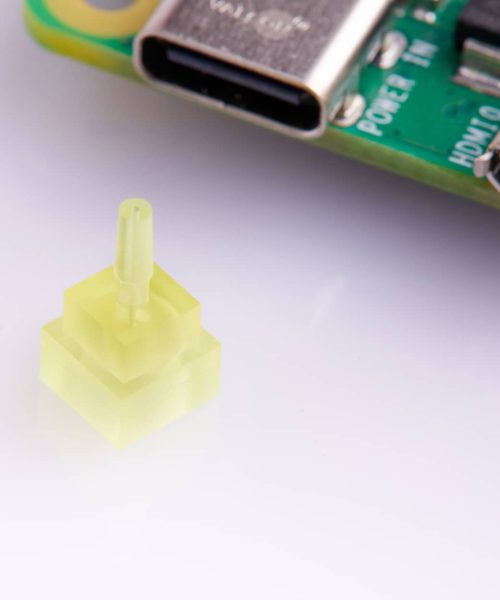
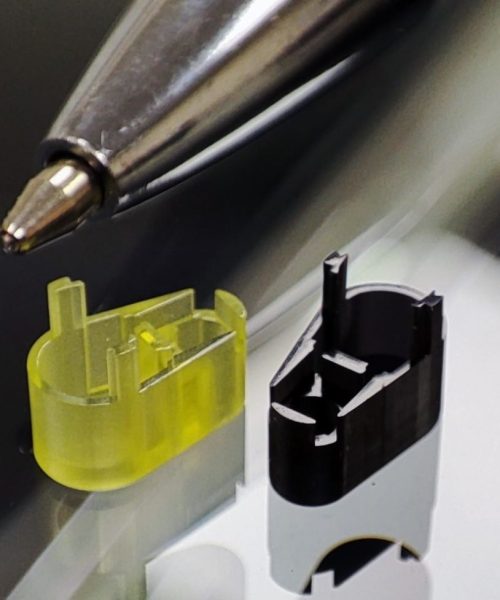
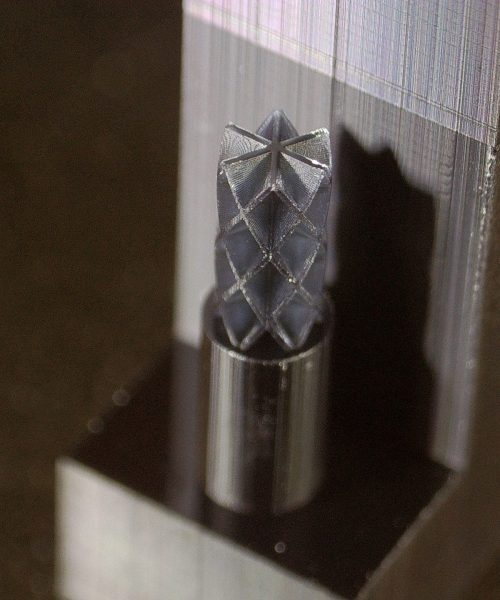
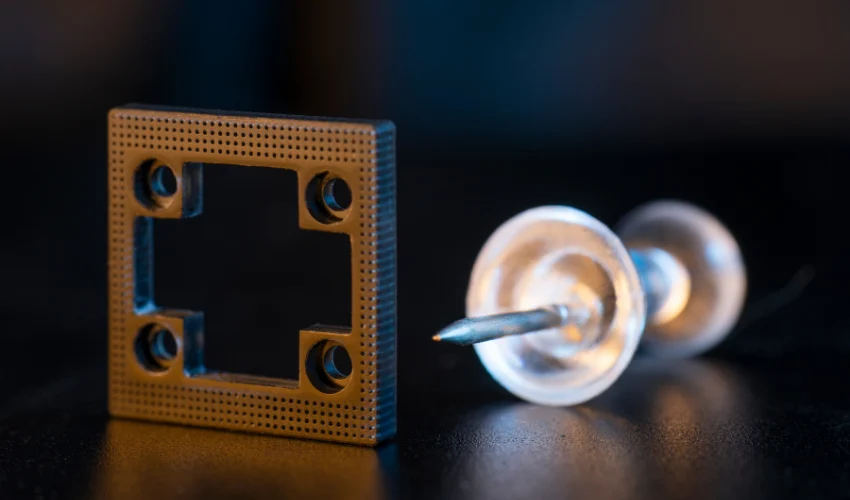
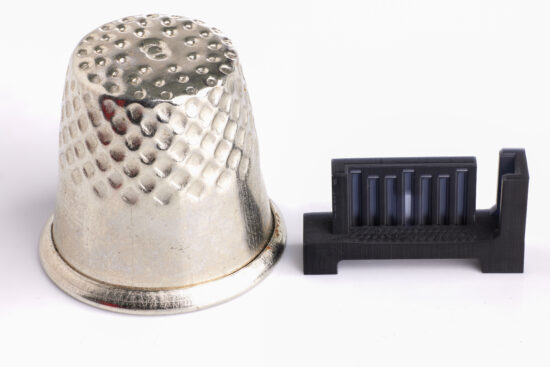
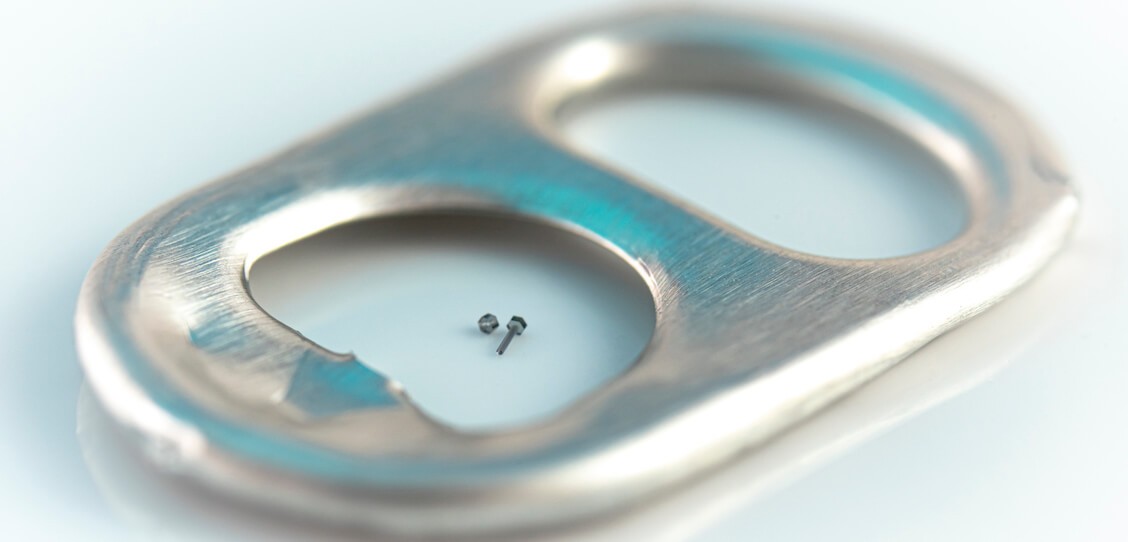
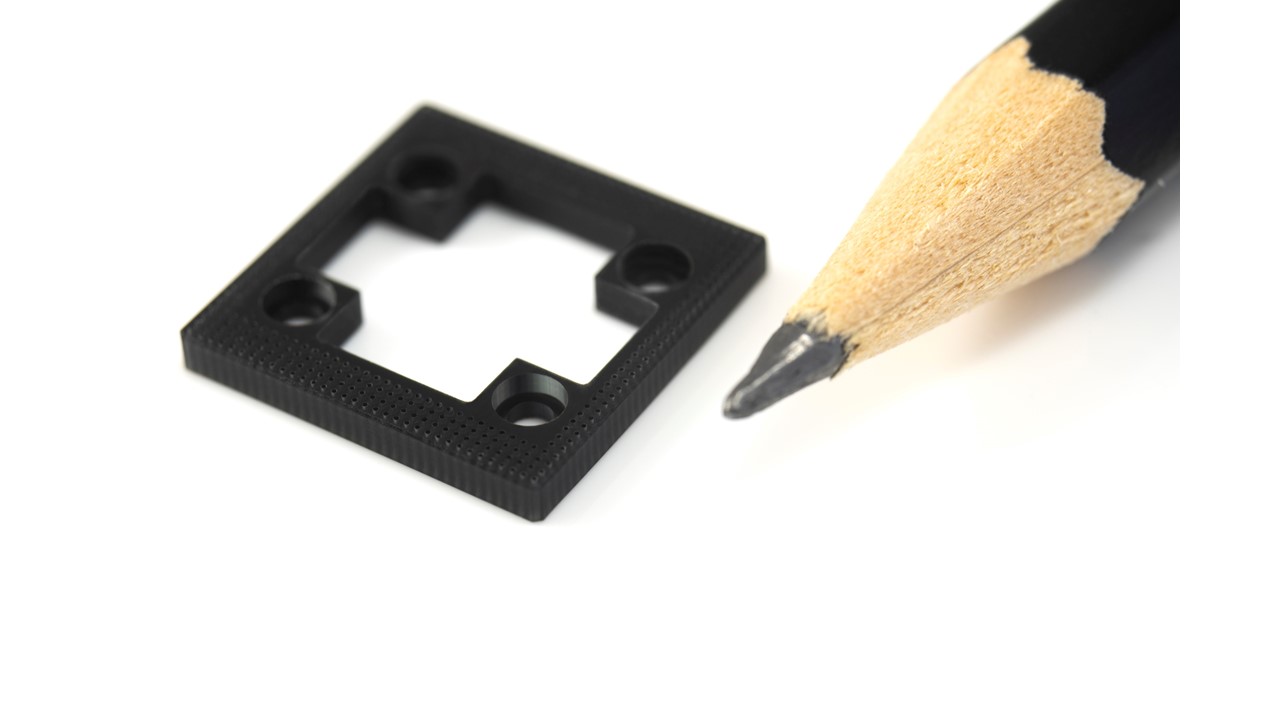
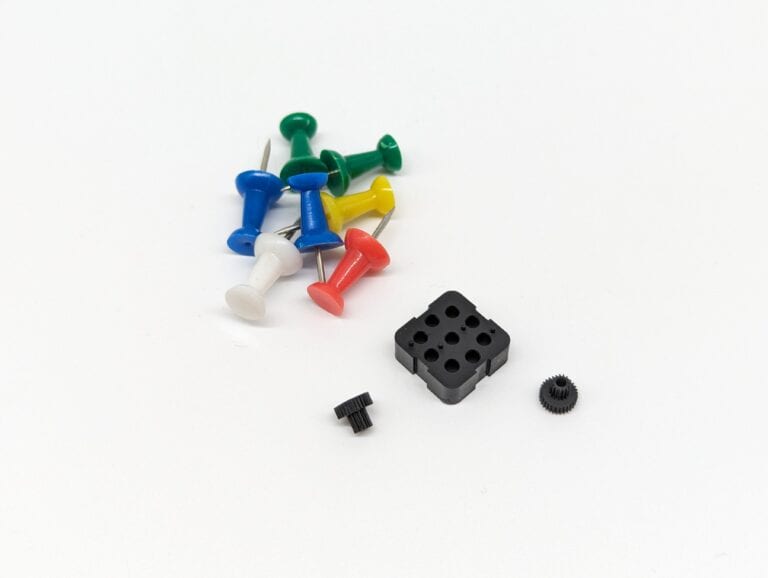
BMF Formula1µ is formulated specifically for BMF’s PµSL technology, which is capable of printing features down to 2µm resolution. This level of detail is simply not achievable with FDM or standard SLA systems, and it opens up possibilities for miniaturised components that would otherwise require expensive CNC machining or injection moulding tooling. 

Repeatable, Production-Ready Results 

For product development teams working towards regulated end-use, repeatability is as important as the initial print quality. Formula1µ is designed to deliver consistent results across print runs, which makes it a reliable material for both prototyping and low-volume production in quality-controlled environments. 
Formula1u-inner-768×578

Advantages & Uses

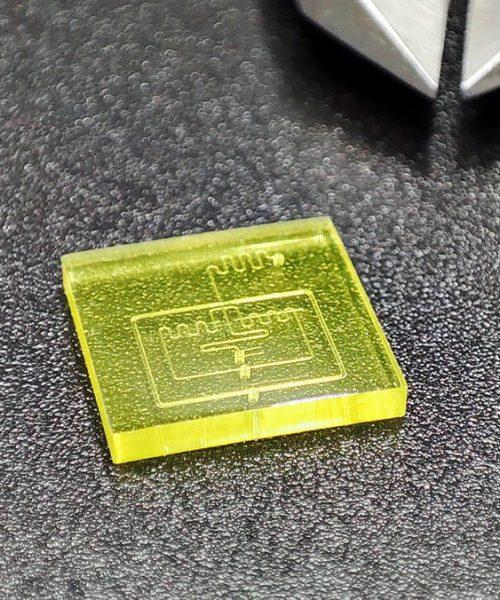
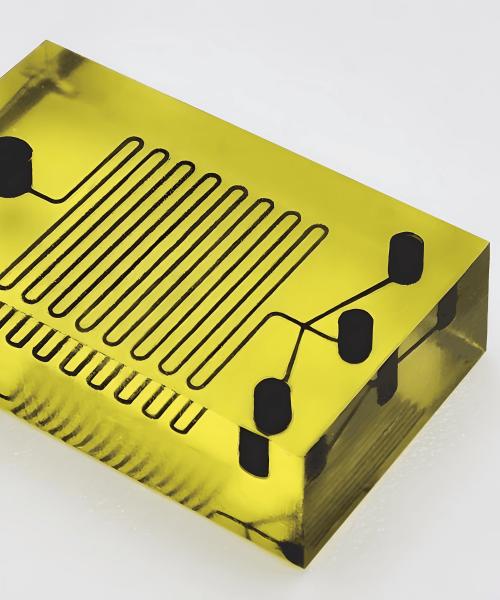
  • Medical devices and diagnostics - Microfluidics, diagnostic cartridges, and precision device housings where tight tolerances and controlled surface properties are both required.
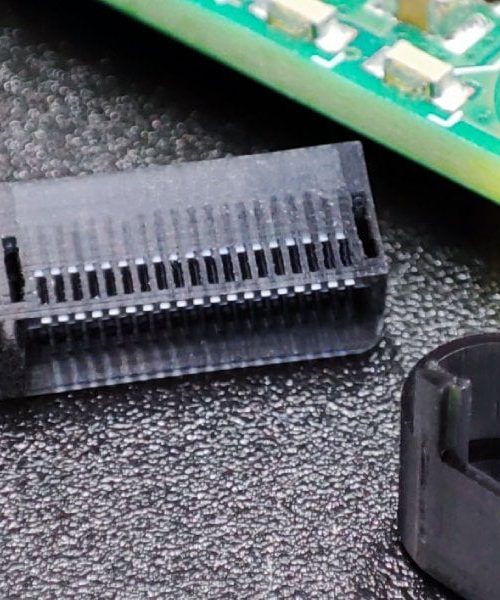
  • Electronics and semiconductor handling - Connectors, fixtures, and jigs used in environments where static discharge could damage sensitive components.
  • Precision tooling and test fixtures - Custom fixtures and gauges that need to hold repeatable positions and withstand repeated use without deformation.
  • Research and development - Where teams need to print functional micro-scale prototypes that closely represent the intended production geometry, without waiting on injection moulding tooling.
  • Aerospace and defence components - Small, high-precision components that need to perform in environments with static sensitivity requirements.

Why Choose BMF Formula1µ for Medical 3D Printing?

Medical 3D printing is one of the fastest-growing areas of additive manufacturing, and the demands placed on materials are increasing alongside it. Best-in-class 3D printed medical tools need to be accurate, durable, and functionally appropriate for their end-use, not just geometrically correct. 

BMF Formula1µ stands out in this space because it addresses several requirements at once. The static-dissipative properties are built into the material, not applied as a secondary process. The mechanical performance is meaningfully better than standard photopolymers in the same class. And the compatibility with BMF’s PµSL platform means that resolution and feature accuracy are genuinely at the micro-precision level. 

For teams working on the development of medical devices, diagnostic tools, or precision instruments, that combination is difficult to find in a single material. It is part of why BMF Formula1µ has become an important part of what IPFL offers to customers working in demanding end-use environments. 

Other 3D Printing Materials

FDM ABS-ESD7

ABS thermoplastic with static dissipative properties for applications where a static charge can damage products.
Appearance
Toughness
Flexibility
Temperature Resistant
Technical Information
Electronics Manufacturers - Essex UK

FDM ABS-M30

Ideal material for conceptual modelling, functional prototyping, manufacturing tools and end-use-parts.
Appearance
Various
Toughness
Flexibility
Temperature Resistant
Technical Information
FDM ABS M30 for Conceptual Modelling

FDM ASA

Now you can build consistently high-quality parts, with exceptional UV stability and the best aesthetics of any FDM thermoplastic.
Appearance
Various
Toughness
Flexibility
Temperature Resistant
Technical Information
FDM 3D Printing Service UK

FDM PC-ISO

PC-ISO is an industrial thermoplastic, which in its raw state, is bio-compatible (ISO 10993/USP Class VI) and can be gamma or EtO sterilized.
Appearance
White
Toughness
Flexibility
Temperature Resistant
Technical Information
FDM PC-ISO

FDM ULTEM 1010

Manufacture out-of-cabin aerospace components and under-the-hood automotive components.
Appearance
Tan
Toughness
Flexibility
Temperature Resistant
Technical Information
FDM ULTEM 1010

FDM ULTEM 9085

ULTEM™ 9085 resin is a flame-retardant high-performance thermoplastic for digital manufacturing and rapid prototyping. It is ideal for the transportation industry due to its high strength-to-weight ratio and its FST (flame, smoke and toxicity) rating.
Appearance
Black or Tan
Toughness
Flexibility
Temperature Resistant
Technical Information
FDM Ultem 9085

HP MJF NYLON12

Produce strong, functional, detailed and complex parts at a fraction of the cost. PA 12 is engineered to produce final parts with dimensional accuracy. Robust thermoplastic for high-density parts with balanced property profiles and strong structures.
Appearance
Available in Grey or dyed Black
Toughness
Flexibility
Temperature Resistant
Technical Information
PRODUCTION 3D PRINTING

HP MJF TPU

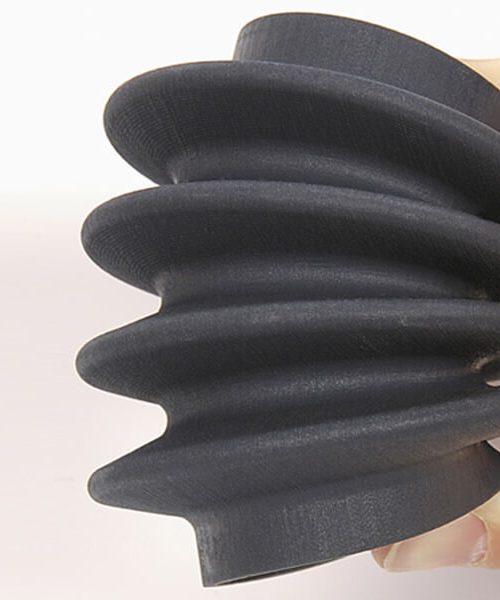
TPU (thermoplastic polyurethane) is a high flexibility material which is a perfect choice for many applications. Resistant to many chemicals and with high resistant, this high performing material is ideal for seals, gaskets, housings and protection shrouds among other parts.
Appearance
Grey or black
Toughness
Flexibility
Temperature Resistant
Technical Information
HP MJF TPU

POLYJET AGILUS

Rubber-like Polyjet photopolymer simulates a wide variety of finished products, from soft-grip handles to footwear. Combine 30-95 ShoreA with rigid materials for seals, gaskets and soft-touch overmoulds.
Appearance
Black
Toughness
Flexibility
Temperature Resistant
Technical Information
Polyjet Agilus Seal & Gasket

POLYJET DIGITAL ABS

Digital ABS is designed to simulate standard ABS plastics by combining high-temperature resistance with toughness. Digital ABS2 delivers those properties plus superior rigidity and toughness in walls thinner than 1.2 mm.
Appearance
Toughness
Flexibility
Temperature Resistant
Technical Information
polyjet digital abs

POLYJET VERO

Combining dimensional stability and fine detail, Rigid Opaque materials are a key component in realistic prototypes that look like your end products, and fit-for-purpose tooling that moves you into production faster.
Appearance
Toughness
Flexibility
Temperature Resistant
Technical Information
polyjet vero prototypes uk

SLA CLEAR

Our clear SLA material is produced at high resolution in all axes giving an incomparable surface finish straight from the SLA 3D printing machine.
Appearance
Clear
Toughness
Flexibility
Temperature Resistant
Technical Information
SLA 3D printed plastic prototype

MICRO HTL

High-performance material with great stiffness and heat resistance that can tolerate temperatures of up to 114°C. Utilised in load bearing applications, HTL delivers exceptional strength, stiffness, and heat resistance, offering up new choices in tooling, dies, and fixtures for precision components.
Appearance
Black or Transparent Yellow
Toughness
Flexibility
Temperature Resistant
Technical Information
Electronics Manufacturers

MICRO RG

A durable engineering material that may be used to print working end-of-life parts. It is biocompatible, with low water absorbtion, and may be used for a variety of applications such as electrical casings, medical devices, snap fittings, and functional prototypes.
Appearance
Transparent Yellow
Toughness
Flexibility
Temperature Resistant
Technical Information
Micro RG 4

MICRO BIO

BIO Resin is designed for non-implantable medical use, meeting ISO 10993 standards. With sterilization capability and proven biocompatibility, it ensures safe, reliable medical-grade parts.
Appearance
Transparent Yellow
Toughness
Flexibility
Temperature Resistant
Technical Information
micro 3d printed serpentine mixer

MICRO HIGH TEMP 300

HI TEMP 300 redefines heat resistance with an HDT surpassing 300°C. Perfect for demanding thermal environments, this translucent amber plastic offers unmatched reliability without requiring secondary thermal post-cure.
Appearance
Transparent Yellow
Toughness
Flexibility
Temperature Resistant
Technical Information

MICRO ST1400

High toughness and elongation properties, this material is tailor-made for projects requiring resilience, especially in snap-fit applications
Appearance
Transparent Yellow
Toughness
Flexibility
Temperature Resistant
Technical Information

MICRO TOUGH

Tough redefines additive manufacturing with its blend of strength, durability, and precision, ensuring reliable performance across diverse applications, from prototypes to specialized components.
Appearance
Transparent Yellow
Toughness
Flexibility
Temperature Resistant
Technical Information

MICRO TOUGH CARBON

Tough Carbon elevates 3D printing, merging the strength of our tough resin with carbon nanoparticles for optical precision, ideal for advanced optics.
Appearance
High Opacity Black
Toughness
Flexibility
Temperature Resistant
Technical Information